Power outage data by ZIP code, for energy installers
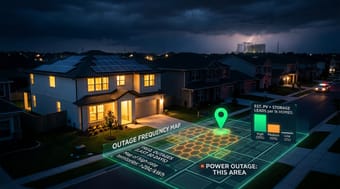
ZIP-level grid disturbance data showing where the grid is weakest, single-family homes densest, refreshed weekly.
Utilities self-report grid disturbances to federal systems. We pull that data continuously, normalize it, and map every event down to the ZIP code.
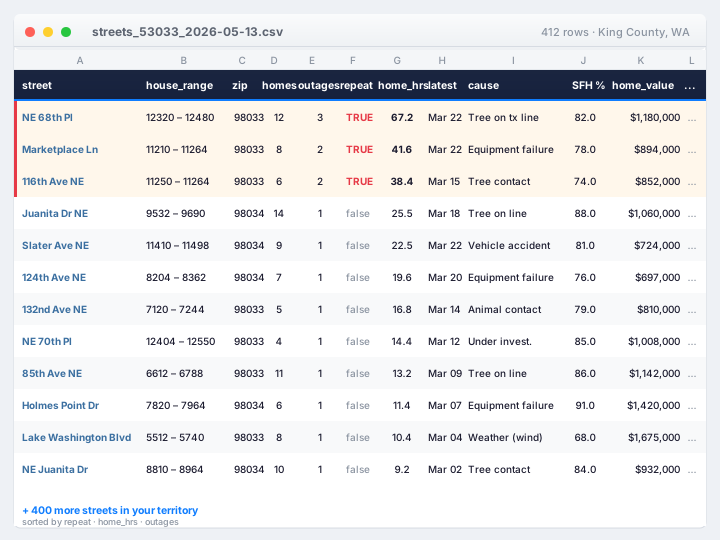
Number of disturbances, average duration, customers affected, and single-family home density — layered into a profile of where the grid is weakest and the economics are strongest.
Every week, you get a ranked list of ZIPs in your territory — disturbance counts, average duration, single-family household %, and the data to back up the door knock. Monthly recaps show the bigger picture.
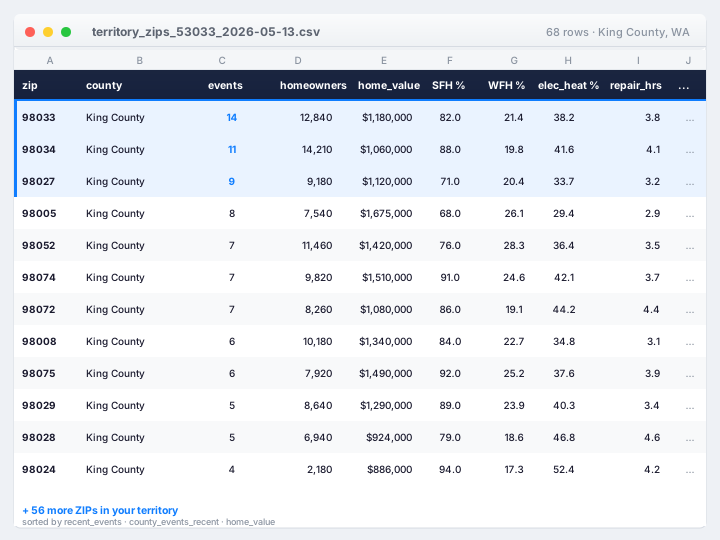
Every ZIP in your counties — ranked by grid activity, single-family home density, and more. Open it in Excel, sort by recent_events, and you've got your target list.
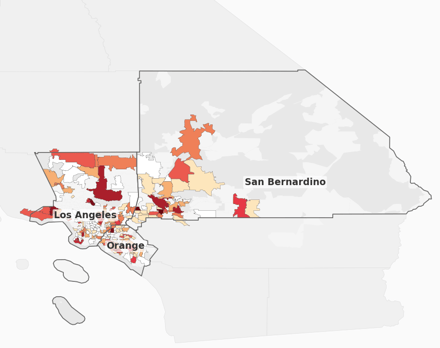
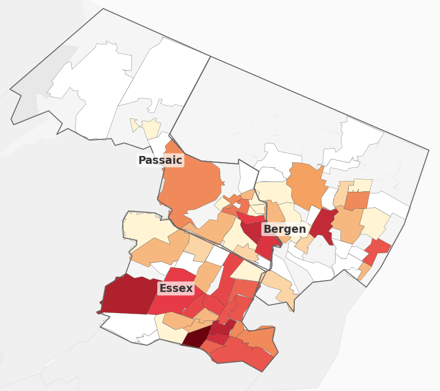
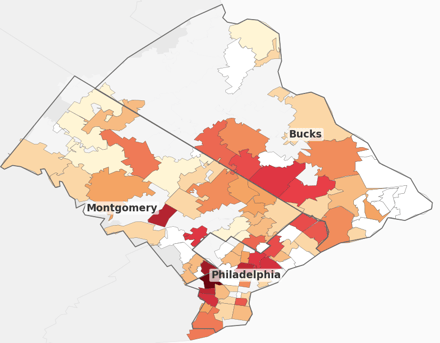
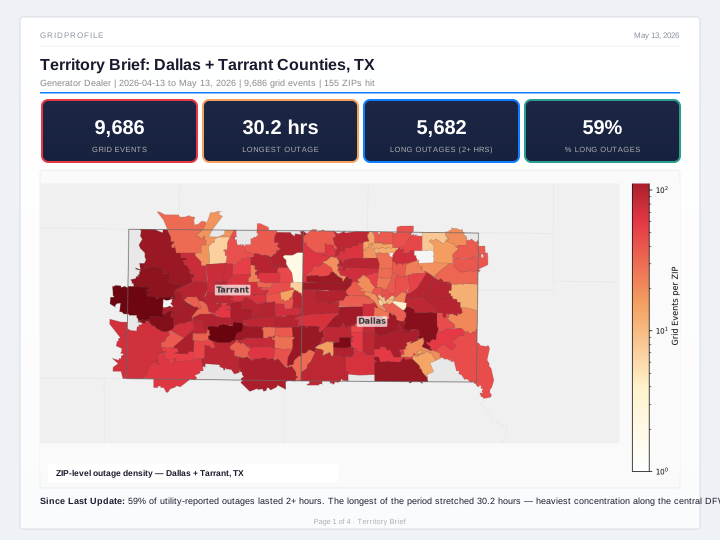
Duration breakdowns, time-of-day patterns, cause analysis, and utility ERT accuracy — plus a territory heatmap and ZIP hotspot table. You also get a Territory Report PDF with demographics and county comparisons.
Every data point traces to a federal or utility source.
Pick your state and up to 3 counties. We'll email you a grid profile — ranked ZIPs, disturbance counts, single-family %, and more.
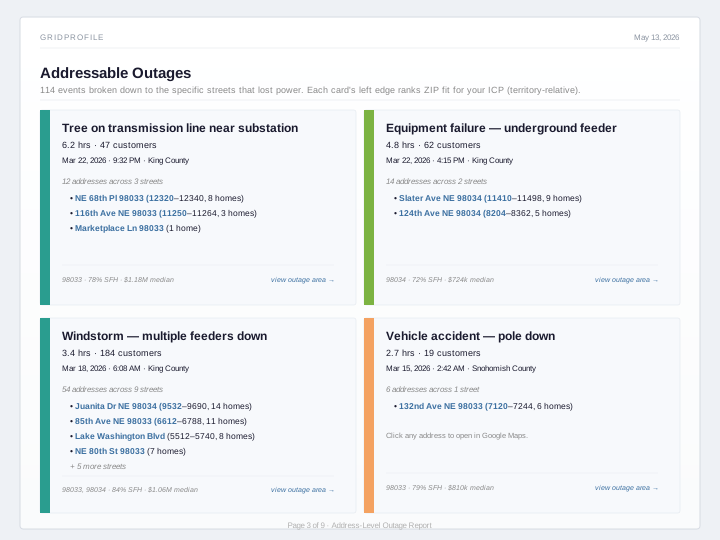
There's no single public source. Utility outage maps only show what's out right now and disappear once power is restored. Federal datasets like the DOE's ODIN feed and the EAGLE-I archive publish history, but report at the county level — and one county typically spans 50 to 200 ZIPs, averaging neighborhoods together.
GridProfile assembles ZIP-level event records from direct utility feeds and federal data, then emails the breakdown for any U.S. territory. See the full walkthrough of public outage data sources →
Every data point traces back to a government or utility source — nothing is estimated or modeled from third-party proxies.
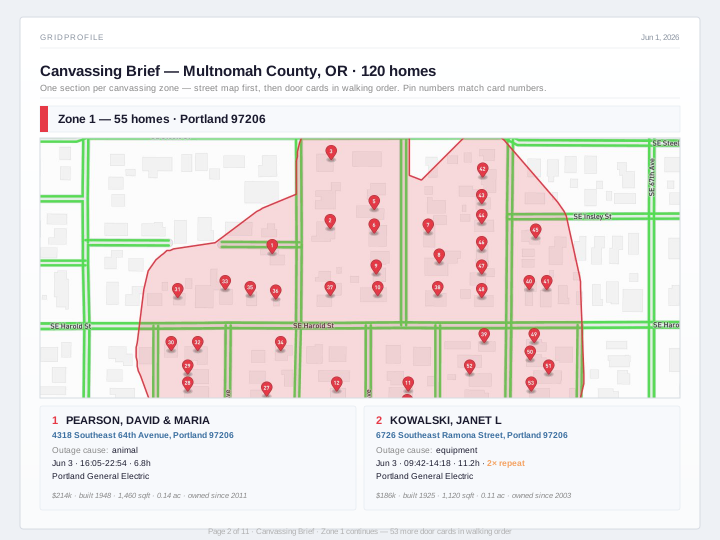
When you submit the form, we generate three files and email them to you within a few minutes:
Subscribers get the same three deliverables on two cadences:
Everything arrives as email attachments — no login, no dashboard, no software to learn. Open the CSV in Excel or Google Sheets and you're ready to build a call list or a mailer route.
A grid disturbance is any event where a utility reports that customers lost service or experienced degraded power delivery. This includes weather-related outages, equipment failures, vegetation contact (trees on lines), vehicle accidents involving infrastructure, animal contact, planned maintenance, and events still under investigation. We track every event that affects 100 or more customers — small enough to catch neighborhood-level disruptions, large enough to filter out single-meter blips.
Lead vendors sell you a name and phone number — someone who filled out a form, possibly weeks ago, and who has already been sold to multiple installers. By the time you call, the homeowner has heard from a dozen competitors or has lost interest entirely.
GridProfile gives you territory intelligence, not contact lists. You get the ZIPs where the grid is weakest, the homes are owner-occupied and single-family, and the economics support an energy conversation. You bring your own outreach — door knocking, direct mail, digital ads geo-fenced to those ZIPs — and you're the only installer using that signal. The data is exclusive to your territory and refreshed weekly, not recycled across buyers.
Yes. The same outage data that drives solar prospecting works for any backup power product. Generator dealers use GridProfile to find counties with long restoration times — the longer the average outage, the stronger the case for a whole-home generator. Battery storage installers target ZIPs where outages are frequent but short, since batteries handle those well. The CSV includes average repair hours and cause breakdowns that apply to any energy resilience sale, not just solar.
That's exactly what it's built for. The CSV ranks every ZIP in your territory by grid activity and single-family home density — the two strongest predictors of a homeowner who's both frustrated with their utility and able to go solar. Sort by recent_events to find where the grid just broke, or by single_family_% to find the densest rooftop neighborhoods. Many installers pull the top 10 ZIPs each week and build their knock list or mailer route from there.
GridProfile tracks grid disturbances across all 50 states, DC, and Puerto Rico — over 3,100 counties. The ODIN federal feed covers every utility that reports to the DOE. On top of that, we run direct scrapers against 25+ major investor-owned utilities (Duke Energy, Entergy, PG&E, SCE, SDG&E, ComEd, PECO, PSEG, Dominion, Oncor, Georgia Power, Alabama Power, National Grid, AEP subsidiaries, FirstEnergy, and more) plus 90+ electric cooperatives through the NISC platform. If a utility serves customers in the U.S. and reports outage data, we're almost certainly tracking it.
Grid events are polled every 10 minutes from both the federal ODIN system and direct utility feeds. When your weekly report lands on Monday, the most recent datapoint is about 10 minutes old. Census demographics and housing data update annually when the ACS releases new estimates. Your report always tells you the data-freshness date so you know exactly what window you're looking at.
The report is built for installers evaluating specific territories — it takes real compute to generate. Requiring a company email helps us verify that the request is coming from someone in the industry, and it lets us limit one free report per company so the data stays valuable. If you're an independent installer using a personal domain, that works too — we just filter out Gmail, Yahoo, and similar consumer providers.
Here are the key columns, in plain English:
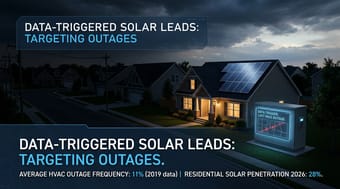
Power outages are a demand signal. A homeowner who lost power last week is more receptive to a solar, battery, or generator conversation than one who hasn't thought about their grid in years. GridProfile tracks every utility-reported event at the ZIP level and cross-references it with single-family home density. Installers sort the CSV by recent grid events to find the neighborhoods where frustration is freshest, then build their door-knocking or direct mail routes from the top ZIPs. The data refreshes weekly, so your targeting stays current.
Why power outages by ZIP code beat county-level data for installers →
The strongest territory signals combine grid reliability and housing type. Grid disturbance data (from DOE's ODIN system) tells you where power is unreliable. Census data tells you which ZIPs have the most single-family, owner-occupied homes. GridProfile pulls both together at the ZIP level — ranked and scored — so you don't have to cross-reference multiple government databases yourself.
Just drop your email and I'll reach out personally.
What happened on the U.S. grid in April 2026 — biggest single events, hottest counties, and the ZIP codes installers should be canvassing first.
Read more
Twenty-five US counties had utility-reported grid events on more than 250 of the last 365 days. Dallas led at 276. Here's the leaderboard.
Read more
Equipment failure caused more than 3x as many US power outages as weather in the last 30 days. The cause that keeps the lights off longest? Trees.
Read more
Where to find power outages by ZIP code, why utility outage maps fall short, and how solar and generator installers actually pull this data.
Read more
County-level outage maps hide the differences between neighborhoods. Why solar and generator installers need outage data by ZIP code.
Read more